
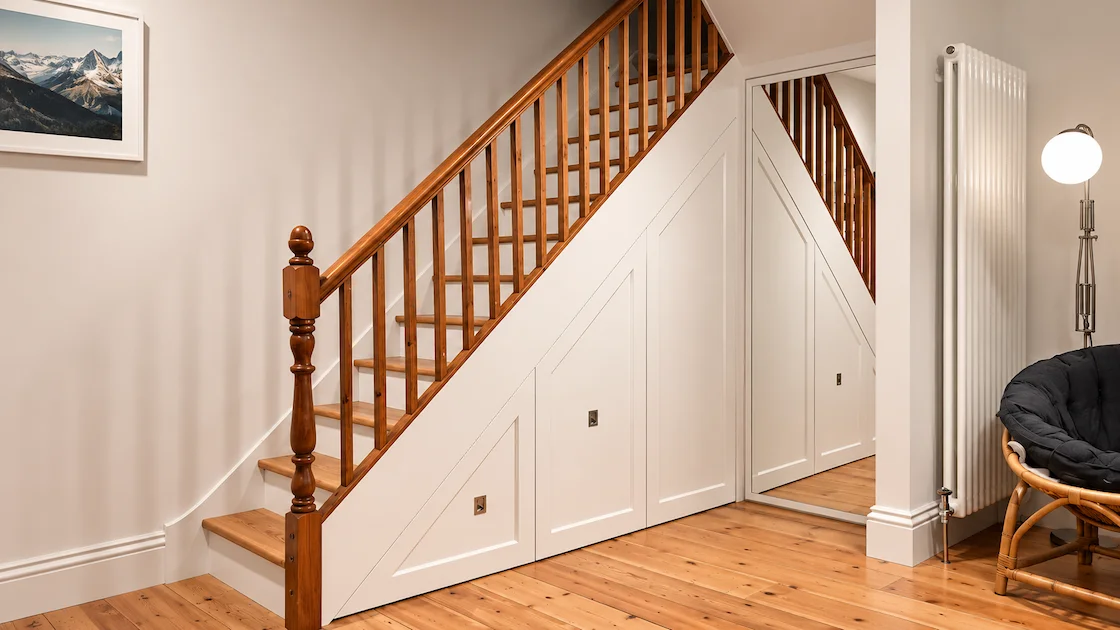
It’s not always easy to find enough storage at home, especially when everyday items end up in awkward corners.
One of our London clients had space under their stairs with lots of potential. But because of its sloping shape, it was hard to organise, and regular cupboards wouldn’t have made the most of it.
We set out to make something more practical—a custom mix of under stairs drawers and cupboards for shoes, coats, bags, and other belongings, all without making the hallway feel crowded.
This project was especially interesting because we combined several storage solutions. Rather than building one big cupboard, we created an L-shaped setup with four sections, including two pull-out drawers of different sizes and a full-height mirrored door.
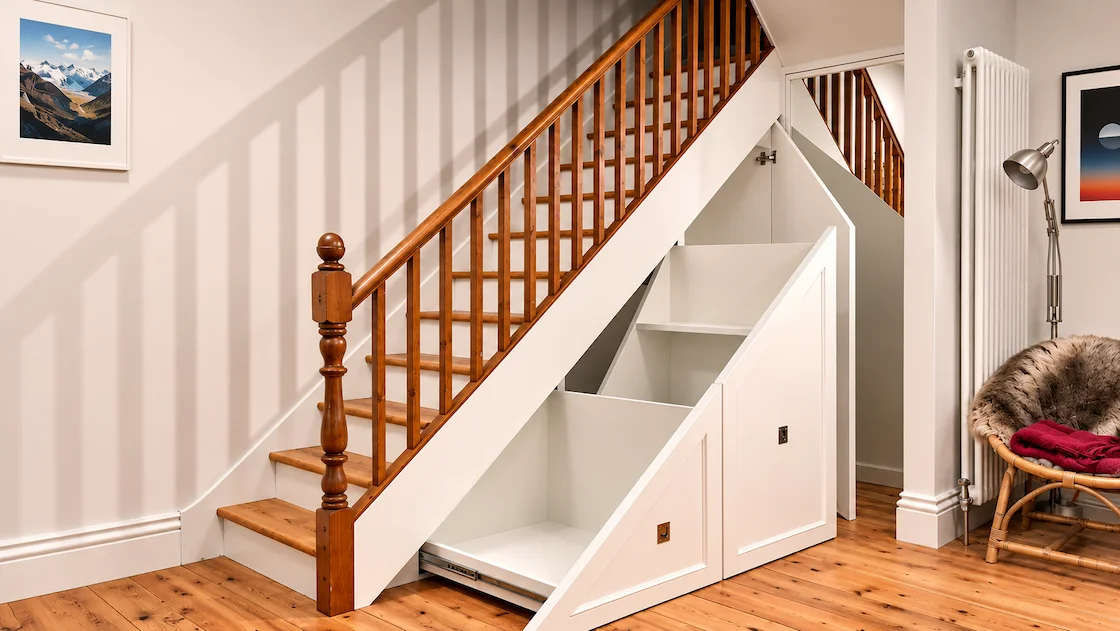
Hand-painted under-stairs cabinets with subtle flush ring pulls and a full-height mirrored door.
Starting with the Space Available
Each staircase comes with its own set of challenges. Some have lots of depth but not much height, while others have pipes, meters, or features that need to stay accessible.
In this property, we also had to consider the existing gas and electricity meters.
Before finalising the design, we talked with the client about how they wanted to use each part of the space. Shoes and smaller items needed to be easy to grab, while coats and bigger things would fit better in a taller cupboard.
We made computer drawings to explore the layout and show how everything would fit together.
This step helped us plan the size of each compartment and agree on the design before starting to build.
Four Storage Sections, Each with a Different Purpose
The L-shaped layout was one of the most interesting parts of this project.
We began under the lowest part of the stairs with a small pull-out drawer. Then we added a second, larger drawer for bigger items.
As we moved along the staircase, we built a cupboard with its own door, then added a full-height mirrored cupboard.
These four sections made the most of the changing height under the stairs, without losing access or practicality.
Building just one cupboard would have been easier, but it would have made it much harder to reach things stored at the back.
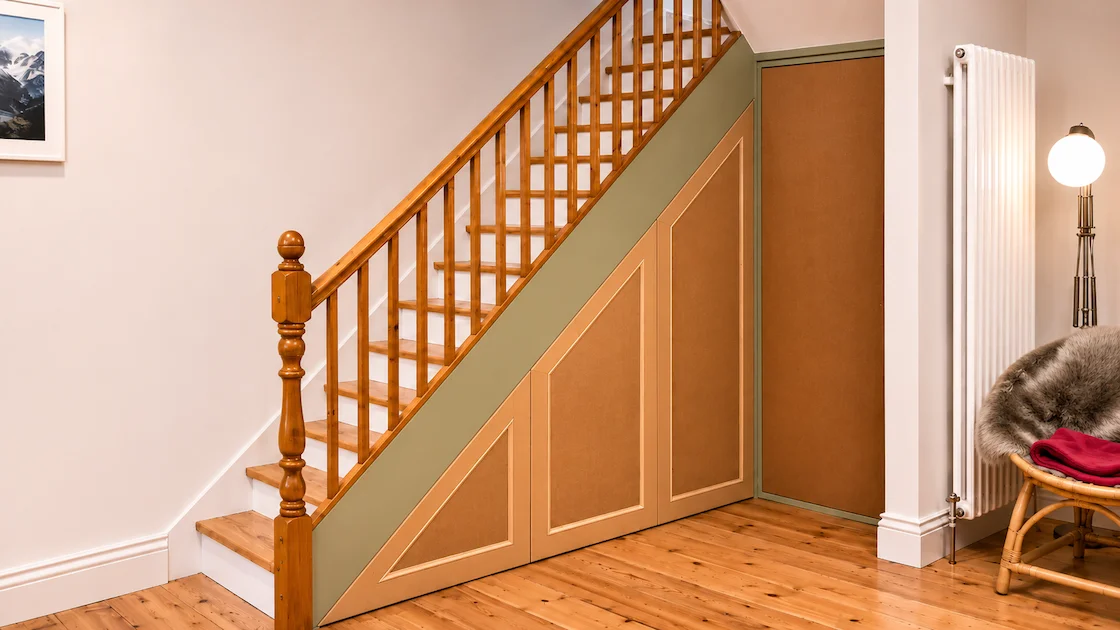
During installation: fitted drawer and cupboard fronts before painting.
Why We Used Heavy-Duty Runners for the Drawers
Two pull-out drawers were some of the most challenging parts of the project.
Our client wanted roomy storage compartments that could hold a lot of weight.
This need shaped our design from the start.
Instead of standard drawer fittings, we chose long, heavy-duty runners for both drawers.
Picking the right runners for under-stairs drawers is especially important for bigger compartments. Once filled with shoes, bags, or other things, a drawer can get much heavier than it looks when empty.
So, we needed hardware that matched each drawer’s size and the weight it would hold.
Both drawers were built to fit the sloping shape of the stairs, using space that would have been hard to reach otherwise.
To keep the outside looking tidy, we used flush ring pulls instead of handles that stick out.
One of the drawers also has an internal shelf, giving a separate spot for smaller things.
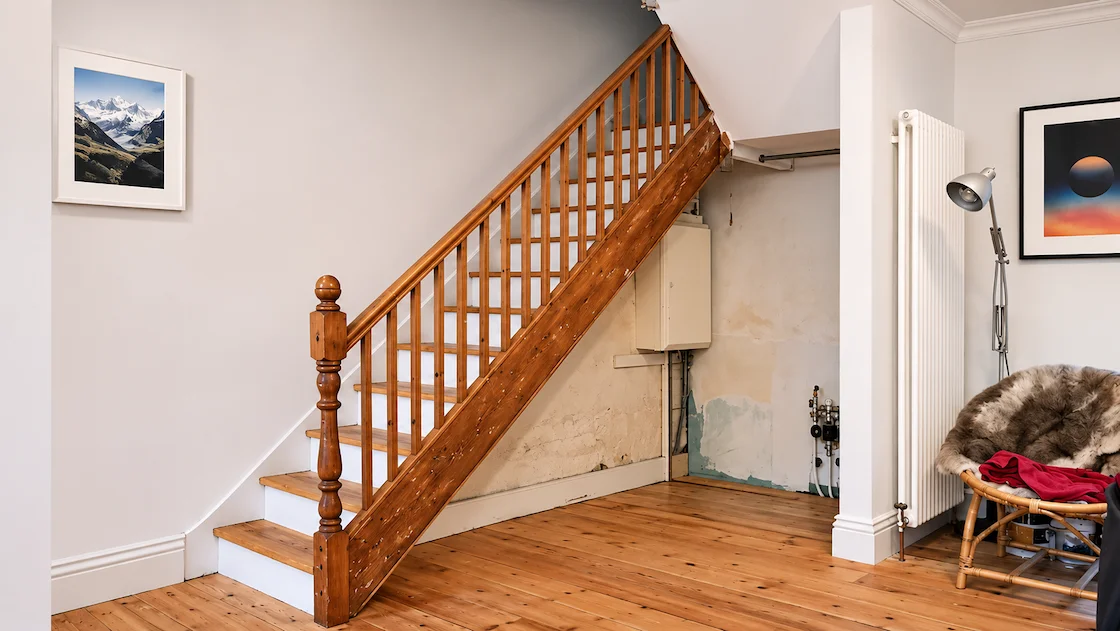
The under-stairs space has been cleared and is ready for installation.
A Mirrored Door That Conceals More Storage
The drawers make it easy to reach things stored lower down, but the taller section needed a different solution.
We designed a full-height mirrored cupboard door with a slim wooden trim and a push-to-open feature.
Adding a mirror had two main benefits.
First, it helped the cabinetry blend in with the rest of the room, instead of looking like a big block of cupboards.
Second, the mirror’s surface reflected light throughout the space.
Behind the mirrored door, we added hanging space for coats, plus room for shoes and bags.
The push-to-open feature meant we didn’t need a handle sticking out, so the cupboard front stayed clean and simple.
Next to the mirrored section, there’s another cupboard door that leads to a different part of the storage.
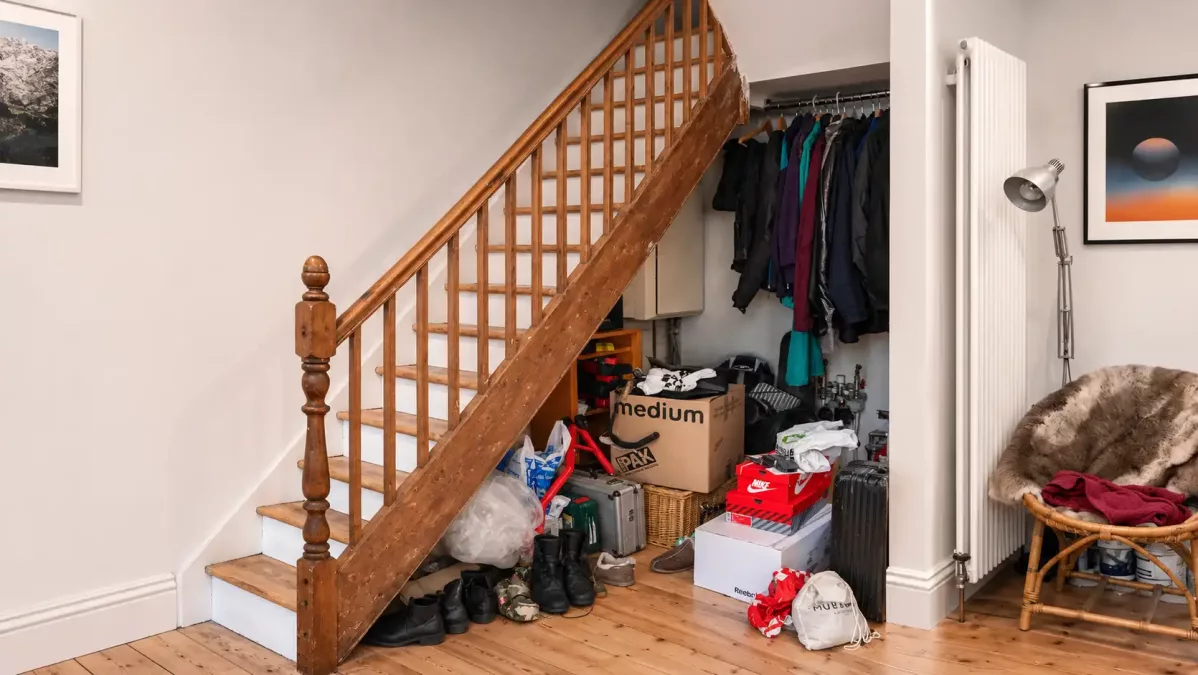
Before installation: coats, shoes and household items stored beneath the stairs.
Working Around the Existing Utility Meters
Storage wasn’t the only thing we had to think about.
Like many London properties, this home had gas and electricity meters positioned beneath the staircase.
We couldn’t just cover them with fixed cabinets. We had to make sure the meters could still be reached when needed.
By planning for the meters early on, we could include them in the design without letting them affect how the finished furniture looked.
It might seem like a small detail, but it can make a big difference in how well custom cabinetry works day to day.
Choosing the Finishing Details
Once we’d settled on the inside layout, we focused on how the cabinetry would look.
We wanted the storage to feel like a natural part of the home, not just something squeezed under the stairs.
A light, hand-painted finish helped with this, along with the mirrored door and subtle hardware.
Flush ring pulls on the drawers keep the fronts simple, and the slim wooden trim around the mirror adds a subtle finishing touch.
The Finished Under-Stairs Storage
The awkward space under the stairs is now a much more useful part of the home.
Shoes, bags, and everyday items now have their own space in the two pull-out drawers. The extra cupboards hold coats and other things, and the mirrored door keeps everything looking tidy.
Most importantly, we did all this without blocking access to the utility meters.
Projects like this show why we love working with custom fitted furniture. The challenge isn’t just about adding storage—it’s about finding the right mix of compartments, hardware, and finishing touches for each space.
Often, the spaces that seem most awkward at first can end up being the most useful.
Planning Something Similar?
Planning drawers or fitted cupboards beneath your staircase? Explore our bespoke under-stairs storage service to learn more about the design and installation process.
To discuss your project, send us photographs of the staircase, approximate measurements, your postcode and a description of what you would like to store.